
The Ostrich Method: Why Avoiding Your Finances During Residency Can Cost You Later
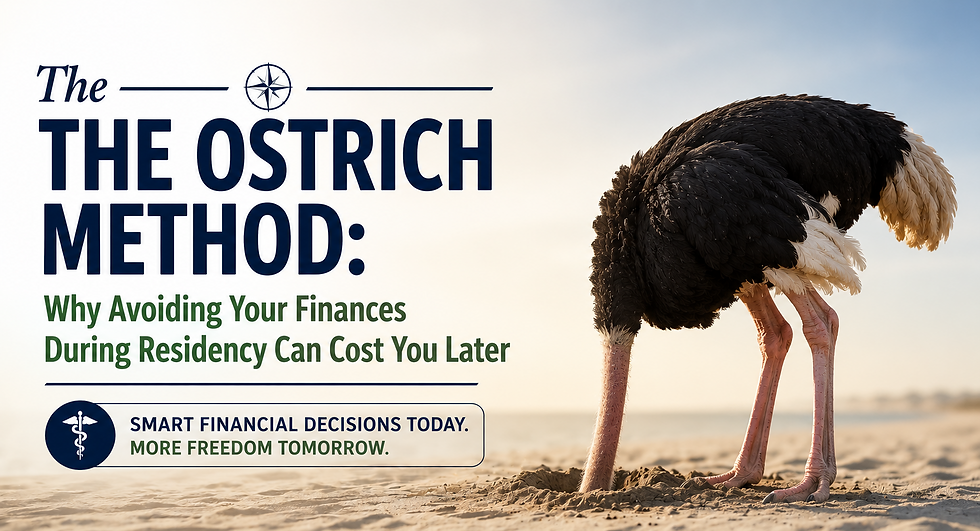
What Is the Ostrich Method?
Have you ever put off checking your bank account after a busy month? Ignored your student loan balance because it felt overwhelming? Delayed opening a retirement account because "there will be time later"?
If so, you've experienced what's often called the Ostrich Method—or more accurately, the ostrich effect.
The term comes from the popular myth that an ostrich buries its head in the sand to avoid danger. While real ostriches don't actually do this, the metaphor perfectly describes a common human behavior: avoiding problems because they're uncomfortable to face.
When it comes to personal finance, the ostrich effect happens when people ignore financial decisions instead of dealing with them. Unfortunately, avoiding money issues doesn't make them disappear—it often makes them more expensive.
For medical residents, this tendency can be especially costly.
Why Medical Residents Are Vulnerable to the Ostrich Effect
Residency is one of the busiest seasons of a physician's career. Long shifts, overnight call, exams, and patient care leave very little mental energy for budgeting, investing, or planning for retirement.
Many residents tell themselves:
"I'll start investing when I'm an attending."
"I don't earn enough to worry about retirement."
"I'll deal with my student loans later."
"I don't need disability insurance yet."
These thoughts are understandable—but they're also examples of financial avoidance.
Every year spent delaying important financial decisions is a year of missed opportunities.
How the Ostrich Method Shows Up During Residency
Financial avoidance isn't always obvious. Here are some common examples:
Ignoring Student Loans
Student loans don't pause simply because you're busy. Understanding your repayment options, interest rates, and forgiveness programs early can help you avoid costly mistakes.
Waiting to Start Investing
Many residents believe investing only becomes worthwhile after receiving an attending salary.
In reality, time is one of the most powerful factors in building wealth. Even modest contributions made during residency have years to benefit from compound growth.
Skipping Disability Insurance
Your ability to earn an income is one of your greatest financial assets.
Protecting that income early with disability insurance can provide peace of mind should the unexpected happen.
Living Without a Financial Plan
Without a plan, it's easy for every paycheck to disappear into everyday expenses.
A simple budget doesn't have to be restrictive—it gives every dollar a purpose.
The Hidden Cost of Waiting
The biggest cost of the ostrich method isn't just money.
It's missed opportunities.
Delaying financial decisions can mean:
Less time for investments to grow
Higher long-term borrowing costs
Increased financial stress
Limited flexibility later in your career
Feeling unprepared when major life events occur
Small actions taken today often have a greater impact than large actions taken years from now.
Replace Avoidance With Action
The good news is that you don't need to become a financial expert overnight.
Instead of trying to solve everything at once, start with one simple step.
You could:
Review your monthly spending.
Learn your student loan repayment options.
Open a retirement account if eligible.
Build a small emergency fund.
Learn about disability insurance.
Create a basic financial plan.
Progress is more important than perfection.
Building Healthy Financial Habits During Residency
Residency is more than clinical training—it's also the beginning of your financial life as a physician.
The habits you develop now can shape your financial future for decades.
Just as you wouldn't ignore a patient's symptoms hoping they'll resolve on their own, your financial health deserves the same attention. Addressing financial decisions early allows you to build confidence, reduce stress, and create a stronger foundation for the future.
Stop Burying Your Financial Future
The ostrich effect reminds us of a simple truth:
Ignoring financial decisions doesn't make them disappear.
Whether it's student loans, investing, insurance, or budgeting, taking small, intentional steps today can make a meaningful difference tomorrow.
You don't need to have everything figured out.
You just need to stop burying your head in the sand and start building your roadmap.
Ready to Take the First Step?
If you're a medical resident looking to make smarter financial decisions without feeling overwhelmed, Roadmap for Residents: Making Smart Financial Decisions Now provides practical guidance designed specifically for physicians early in their careers.
Because the best time to start building your financial future isn't after residency.
It's today.


Comments